How to Choose the Right Construction Gloves to Stay Safe

Leather work gloves are great for hauling lumber. They're not so great for caulking a window, rolling primer, or finishing a slab. Wet, sticky, and chemical jobs soak right through cloth and leather, and that's where heavy-duty disposable gloves earn their spot in the truck.
The right disposable glove keeps adhesives, sealants, form oil, paint, and wet concrete off your crew's skin, then comes off clean at the end of the task. The key is matching the glove's material and thickness to the job. Here's how to pick, plus the gloves we recommend for each kind of work.
When Disposable Gloves Make Sense on a Job Site
Disposable gloves don't replace cut-resistant or impact gloves. They go on for the messy, wet, or chemical parts of the day, such as:
Painting, staining, and priming, where paint and solvents would otherwise end up on hands.
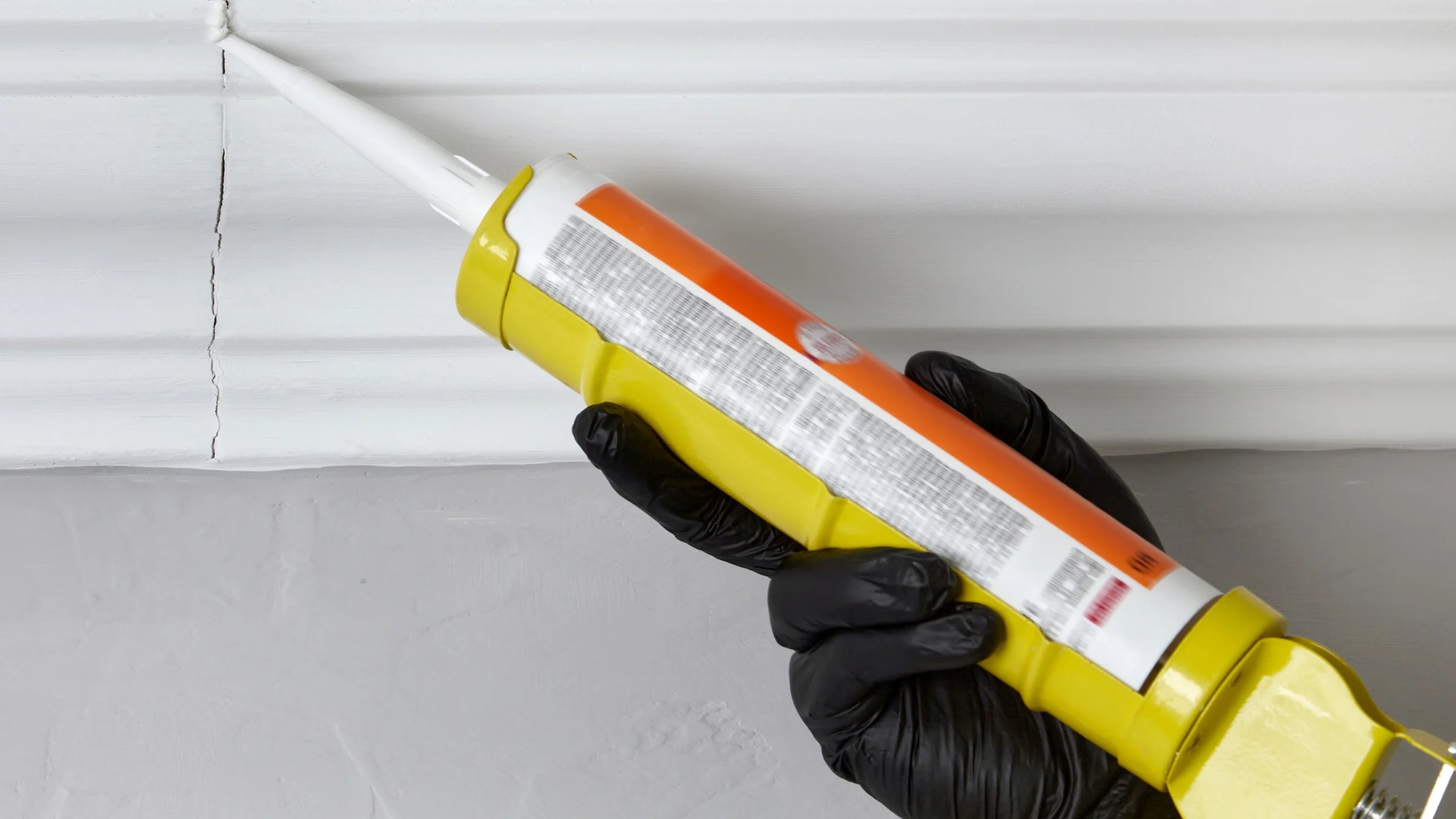
Caulking, adhesives, and sealants, which are hard to scrub off skin and can irritate it.
Concrete finishing and cleanup, since wet concrete is caustic and can burn skin with long contact.
Equipment maintenance, like oil changes, greasing fittings, and fueling generators.
Site cleanup with degreasers and cleaning chemicals.
How Thick Should Your Gloves Be?
Disposable glove thickness is measured in mils (thousandths of an inch). Thicker gloves resist tears and punctures better, while thinner gloves give you more feel. As a rule of thumb, 3 to 4 mil works for light, quick tasks. 5 to 6 mil is the everyday sweet spot for most trades. 8 mil and up is heavy-duty territory for rough surfaces, tools, and longer jobs.
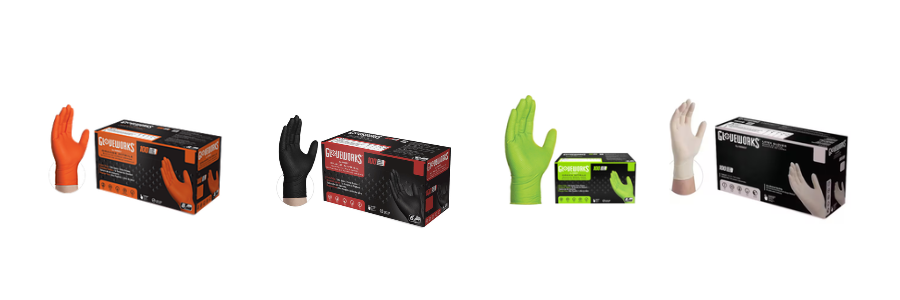
6 Disposable Gloves for Construction Work
#1 Heavy-Duty 8 Mil Orange Nitrile Gloves
For the toughest disposable work, Ammex Gloveworks 8 Mil Orange Nitrile Gloves are thick, textured, and highly visible, so they're easy to spot on a busy site. They're also touchscreen capable, which means your crew can check a phone or tablet without pulling them off.
Best for: demolition cleanup, equipment maintenance, and handling rough materials.
#2 Extended-Cuff Nitrile Work Gloves
When wet concrete, sealers, or cleaning chemicals could run down the wrist, a longer cuff matters. Ammex Gloveworks 6 Mil Nitrile Work Gloves have an extended 18-inch length that covers the forearm, so splashes stay off skin.
Best for: concrete finishing, applying sealers, and chemical cleanup.
#3 Industrial Textured Nitrile Gloves
Oily tools and wet materials get slippery fast. Ammex Gloveworks Industrial RDT Nitrile Gloves are 8 mil with a raised diamond texture that grips even when surfaces are greasy.
Best for: oil changes, greasing equipment, and handling wet or oily parts.
#4 Everyday 6 Mil Black Nitrile Gloves
For general jobsite use, Ammex Gloveworks 6 Mil Black Nitrile Gloves balance protection and dexterity. They're thick enough for painting and adhesives, and the black color hides grime between changes.
Best for: painting, caulking, and adhesives.
#5 Heavy-Duty Latex Gloves
Latex is stretchy and comfortable for detail work. Ammex Gloveworks 8 Mil Latex Gloves add thickness for durability while keeping a close fit. Skip latex if anyone on your crew has a latex allergy and go with nitrile instead.
Best for: finish work and tasks that need a precise grip.
#6 Light-Duty Vinyl Gloves
For quick, low-risk tasks, Ammex X3 3 Mil Vinyl Gloves are an affordable glove to keep in every job box. They slip on and off fast and work well for short jobs where you just need a clean barrier.
Best for: quick cleanup, light handling, and visitors on site.
Nitrile, Latex, or Vinyl?
Nitrile is the go-to for most construction work. It resists punctures, oils, and many chemicals, and it's latex-free. Latex offers the best stretch and fit but can cause allergic reactions. Vinyl is the most budget-friendly and fine for short, light tasks, but it tears more easily and offers less chemical protection. Always check the product label or safety data sheet for the specific chemicals you're handling.
Keep gloves where your crew can grab them. A Kantek Triple Glove Box Dispenser mounts in a jobsite trailer or shop and holds three sizes, so the right fit is always within reach.
Stock Up on Disposable Gloves at Buy Direct
Buy Direct, the online supply store from Mission Linen Supply, carries disposable nitrile, latex, and vinyl gloves by the box and by the case at wholesale prices, with free delivery and no minimum order. Shop our full range of gloves and glove dispensers .
FAQs
How Thick Should Nitrile Gloves Be for Construction?
For most construction tasks, 5 to 6 mil nitrile gloves offer a good balance of protection and feel. Step up to 8 mil for rough materials, heavy tool use, or longer jobs where tears are more likely. Thinner 3 to 4 mil gloves are fine for quick, light tasks but wear through quickly on a job site.
Are Nitrile Gloves Good for Concrete Work?
Yes. Nitrile gloves hold up well against wet concrete, which is caustic and can burn skin with prolonged contact. Choose a thicker glove with an extended cuff so concrete can't run down the wrist, and swap gloves right away if one tears. For heavy lifting and block work, wear a coated work glove instead.
Can Nitrile Gloves Be Used for Electrical Work?
No. Disposable nitrile gloves are not rated to protect against electrical shock, even though nitrile itself doesn't conduct well. Work on or near energized parts requires rated rubber insulating gloves that meet OSHA requirements. Disposable gloves are only for keeping hands clean and protected from chemicals and grime.
How Often Should Disposable Gloves Be Changed?
Change disposable gloves whenever they tear, get punctured, or become heavily contaminated, and every time you switch tasks or chemicals. Never wash or reuse disposable gloves, since that breaks down the material. Keeping a box in every truck and job box makes it easy for crews to grab a fresh pair.
Trending in Industrial
Best delivered price — free delivery, no minimum.