
5 Different Warehouse Material Handling Equipment

Most shipping problems start at the packing table. A box that’s too big lets products slide around, cheap tape pops open in a hot truck, and a smeared label sends a pallet to the wrong dock. Customers never see your warehouse, but they see the box that shows up at their door.
If you pack and ship orders every day, five supplies do most of the work: boxes, tape, cushioning, labels and stretch wrap. Here’s what to stock at every packing station, with specific products you can order on Buy Direct.
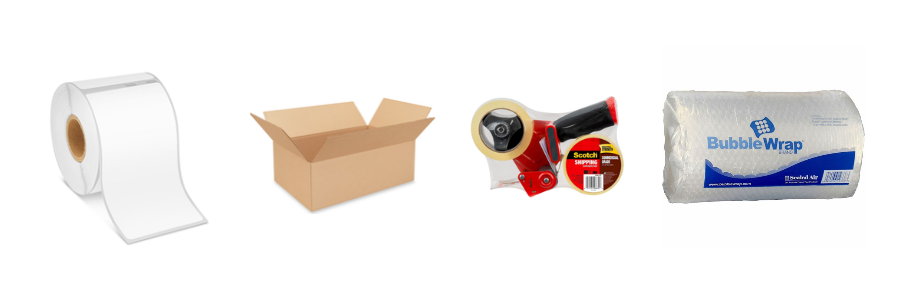
5 Packing and Shipping Supplies Every Warehouse Needs
1) Corrugated Shipping Boxes
Keep a few standard sizes on hand so packers can pick a box that fits the product instead of filling empty space. Universal 18" x 12" x 6" Corrugated Shipping Boxes come 25 to a bundle and suit a wide range of everyday orders. Add a smaller and a larger size once you know which orders you ship most.
2) Packing Tape and a Tape Gun
A pistol grip dispenser lets a packer seal a box with one hand, which adds up fast over a full shift. The Scotch Commercial-Grade Packaging Tape with Pistol Grip Dispenser is a good starter kit, and Duck HD Clear Packing Tape refills come six rolls to a pack. Use the H-taping method (a strip down the center seam and across both edges) for heavier boxes.
3) Bubble Wrap and Cushioned Mailers
Anything breakable needs cushioning on every side. Sealed Air Bubble Wrap is perforated, so packers can tear off the length they need without hunting for scissors. For smaller items that don’t need a box, Sealed Air TuffGard Cushioned Mailers have bubble padding built in and a peel-and-seal flap.
4) Shipping Labels
A clear, scannable label is what gets a package where it’s going. Dymo 4" x 6" Shipping Labels are the standard size most carriers use, and they come 220 to a roll. Put the label on the largest flat side of the box and keep it away from seams and tape.
5) Stretch Wrap
When orders leave on a pallet, stretch wrap keeps the load together on the forklift and in the truck. Sigma Stretch Hand Prestretch Film is already stretched at the factory, so it’s easier to apply by hand and uses less film per pallet. Start wrapping at the base, tie into the pallet, and work your way up.
Tips for a Faster, Safer Packing Station
Set every station up the same way, with boxes, tape, cushioning and labels in the same spots. Packers move faster when they don’t have to think about where things are, and it’s easier to see what needs restocking.
Right-size your boxes. Shipping air costs money, since many carriers charge by dimensional weight, and a snug fit means less cushioning and fewer damaged orders.
Check your supply levels weekly and reorder before you run out. Running out of tape or labels on a busy day stops the whole line, so it’s worth keeping a few extra cases in reserve.
Move full boxes with a cart, not by hand. A Safco Stow-Away Platform Hand Truck moves heavy cartons from the packing table to the dock and folds flat when you’re done.

Safety Gear for Packing and Shipping
Packing looks low risk, but box cutters and heavy cartons cause plenty of injuries. A few basics go a long way.
Safety cutters: The Pacific EZ4 Self-Retractable Guarded Safety Cutter pulls the blade back as soon as it leaves the cardboard, which helps prevent the most common packing injury.
Gloves: Gloveworks Cut Resistant Nitrile Gloves add protection when opening cases and handling sharp-edged products.
High-visibility vests: Anyone working near forklifts or loading docks should wear one. The MCR Safety Mesh General Purpose Safety Vest is lightweight and has reflective strips.

Stock Your Packing Stations on Buy Direct
Whether you run a fulfillment center, a distribution warehouse or a back room that ships a few dozen orders a day, these supplies keep packages moving and arriving in one piece. Order them on Buy Direct with free delivery and no minimum, or talk to your Mission Rep about adding them to your regular order.
FAQs
What supplies do I need for a packing station?
A basic packing station needs shipping boxes in a few sizes, packing tape and a tape gun, cushioning such as bubble wrap or padded mailers, shipping labels and a safety cutter. Warehouses that ship on pallets should add stretch wrap. Keep everything within arm’s reach so packers don’t have to walk to restock.
What is the best tape for shipping boxes?
Clear polypropylene packing tape about 2 inches wide is the standard for shipping boxes. Thicker tape, measured in mils, holds better on heavy boxes and in hot or cold trucks. Avoid masking tape or duct tape, which can peel off in transit and may not be accepted by some carriers.
How do you pack a box so items don’t break?
Choose a box that leaves about 2 inches of space on every side. Wrap fragile items individually in bubble wrap, fill the gaps so nothing shifts when you shake the box, and seal every seam with packing tape. Mark the box fragile if your carrier offers that handling option.
What is the difference between stretch wrap and shrink wrap?
Stretch wrap is pulled tight around a pallet and holds the load by its own tension, so it doesn’t need heat. Shrink wrap is applied loosely and then heated so it tightens around the product. Most warehouses use stretch wrap for pallets because it’s faster and needs no extra equipment.
Trending in Industrial
Best delivered price — free delivery, no minimum.